If your builder’s risk policy is written through Technical Risk Underwriters (TRU), your jobsite surveillance has to meet TRU’s Minimum Security Requirement – Tier 2. It’s a detailed standard, and a camera on a pole won’t pass. Here’s what it asks for, in plain language, and how to check whether your vendor delivers it.
1. Coverage: at least two units, three cameras each
TRU wants the whole perimeter covered, not just the gate.
- No fewer than two surveillance units on the site.
- Each unit has at least three cameras, including one overhead camera that covers the blind spot between the two perimeter cameras.
- 100% of the site perimeter covered, unless your TRU Security Agreement says otherwise.
- Infrared (IR) for low-light coverage.
The overhead camera is the one most vendors miss. A typical trailer has two or three cameras pointed outward, which leaves a blind spot right under the mast.
2. Real-time detection that knows people from vehicles
Motion alerts aren’t enough. The system has to detect intrusions along the perimeter in real time using automatic video analytics and zone calibration, tell people from vehicles, send events to a monitoring station for verification, and prompt an immediate response.
3. Armed every non-working hour, automatically
- Monitoring must be armed during all non-working construction hours.
- The system needs a failsafe that arms itself on a set schedule, so nobody has to remember.
- The monitoring center must be fully engaged during those hours and able to provide video when TRU asks for it.
4. What every unit must have
- Its own communications link, so each unit reports alerts directly to the monitoring center.
- GPS, so the vendor knows where every unit is.
- Tamper-proof wiring for communications, video and power, to defeat cable cutting.
- Live talk-down audio that can reach an intruder anywhere on the perimeter.
- Strobes or lights that show an intruder they’ve been detected.
5. Power: 72 hours on solar, and alerts when it drops
- Solar-powered units need a 72-hour battery lifespan, and the site should get a solar evaluation before install so panels aren’t shaded.
- AC-powered units need an 8-hour battery backup, and units can’t be daisy-chained so one failure takes down others.
- All batteries are monitored, and the monitoring center alerts site personnel if a battery drops to 50%.
- If a unit loses power or communication while armed, an alert goes to the monitoring center and the strobe runs for at least 15 seconds.
6. Daily audits and paperwork
- A daily audit of every camera to make sure it works and its view hasn’t been moved or blocked.
- Issues diagnosed and addressed within 48 hours.
- A daily email to the site contacts, at least two hours before arming, listing any offline equipment.
- A call log updated at least quarterly, and every call followed up by email.
- TRU notified whenever equipment is removed from or added to the project.
- TRU can audit the vendor, visit the monitoring center and access the cameras.
Vendor checklist
Before you sign, ask your surveillance vendor:
- Does each unit have an overhead camera, or just perimeter cameras?
- Does the system arm itself on a schedule?
- How long do your solar units run without sun, and who gets the 50% battery alert?
- Do you send daily offline-equipment emails before arming?
- Will you handle the equipment notifications to TRU?
How MSS meets TRU Tier 2
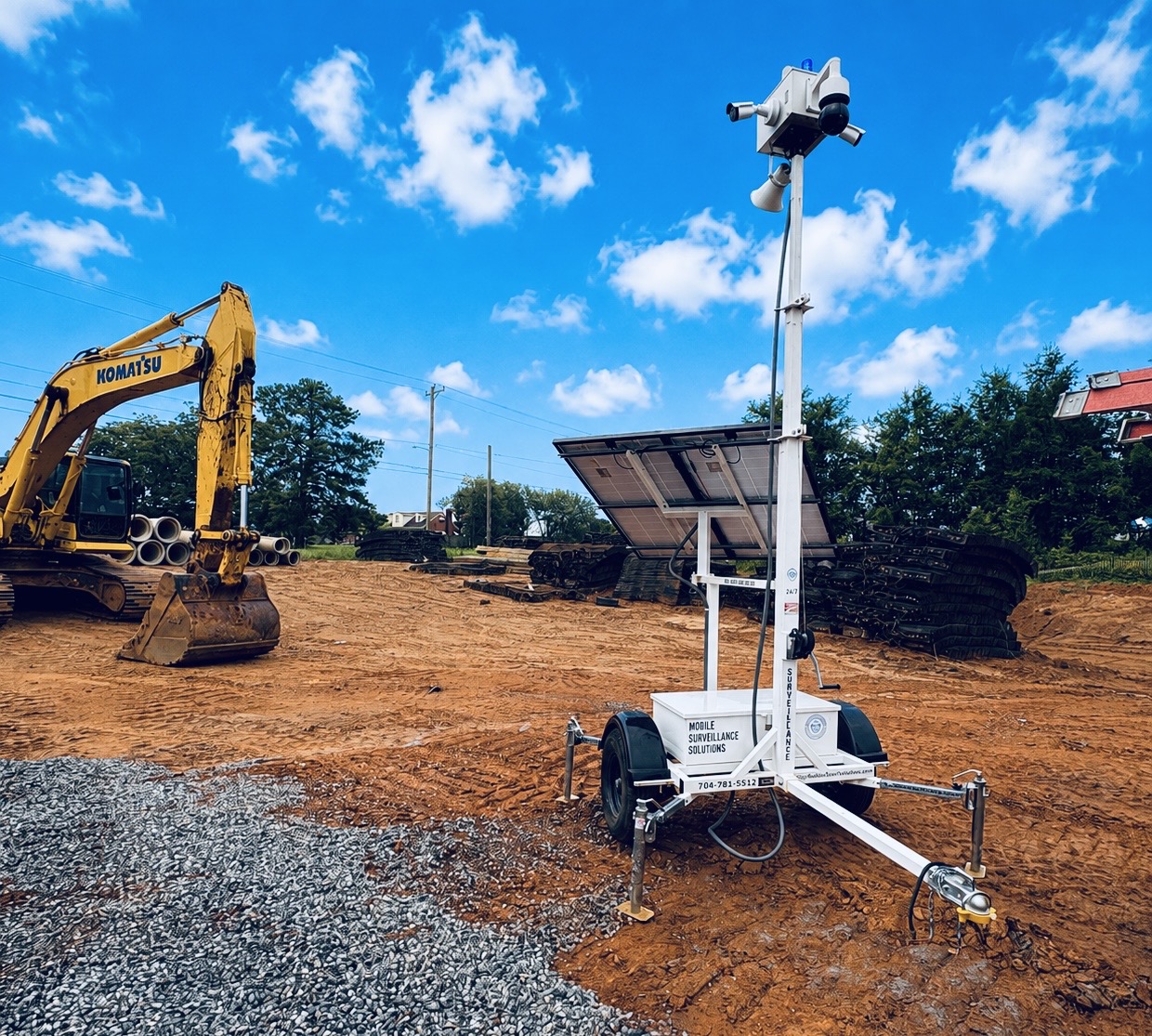
Our TRU build pairs two fixed infrared cameras with a 12MP 360° fisheye overhead, the three-camera layout TRU asks for. Every trailer has GPS, live talk-down audio and strobes, 24/7 AI detection that tells people from vehicles, and operators who verify and respond. Our solar trailers run up to 96 hours without sun, well past TRU’s 72-hour minimum, with remote battery-health alerts. Our crew delivers and sets up every trailer, and monitoring is included.
Insured through TRU? Request a free site survey and we’ll plan a layout that meets your Security Agreement. See also construction security and our FAQ.
This summary is based on TRU’s published Minimum Security Requirement – Tier 2 for surveillance systems. Your TRU Security Agreement is the final word for your project; confirm any questions with your broker or TRU.
